- Look beyond rental price and ask about fleet size, container availability, service coverage and experience before choosing a rolloff company.
- Discuss materials, recycling options, dumpster placement and pickup schedules before the project begins to avoid problems later.
- For larger construction projects, choose a rolloff provider with enough equipment and flexibility to keep up as the job changes.
Choosing a rolloff dumpster company may seem pretty straightforward. You need a container, you call for delivery, fill it up and have it hauled away. For a small cleanup, it might be that simple, but construction sites, demolition projects and ongoing commercial work usually require quite a bit more coordination. The company you choose can affect how smoothly containers are delivered and exchanged, how materials are handled, and ultimately how efficiently your job site operates.
Before scheduling a dumpster, it helps to ask a few questions about the company behind the service. Contractors working throughout Washington, DC, Baltimore, Maryland and Northern Virginia should look beyond price alone and consider whether a provider has the equipment, experience and local resources to keep up with the demands of the project. Here are nine questions worth asking before making the call.
1. What Areas Do You Regularly Service?
Start with the basics. A company may advertise service across a large region, but that doesn’t necessarily mean trucks are regularly operating in your area. The farther equipment has to travel, the more difficult it can become to accommodate schedule changes, additional containers or unexpected pickups.
A rolloff provider with trucks and containers already operating near your project is generally in a better position to provide consistent service. EAI Rolloff operates from locations in Clarksburg and Capitol Heights, Maryland, and Manassas, Virginia, allowing our trucks to serve projects throughout Washington, DC, the Baltimore region, Central Maryland and Northern Virginia. That regional coverage becomes especially important for contractors managing multiple projects in different parts of the DC and Baltimore markets.
2. What Dumpster Sizes Are Available?
There isn’t one rolloff container that works for every job. A residential renovation has very different needs from a building demolition, commercial development or major site work project. Before ordering, talk with the provider about what you’re removing, how much material you expect to generate and how much space is available for the container.
Choosing the right dumpster size can reduce unnecessary exchanges while also preventing customers from paying for more container than they need. Heavy materials such as concrete may also require a different approach than lighter construction debris because weight can become a factor long before the container looks full. A knowledgeable rolloff company should be able to discuss the project and recommend an appropriate container rather than simply asking which size you’d like delivered.
3. Does the Company Have Enough Trucks and Containers to Support Your Project?
This question becomes increasingly important as the size of the project grows. Having one truck available to deliver a dumpster is one thing. Having the capacity to provide multiple containers, handle frequent exchanges and respond when the project suddenly generates more debris than expected is another.
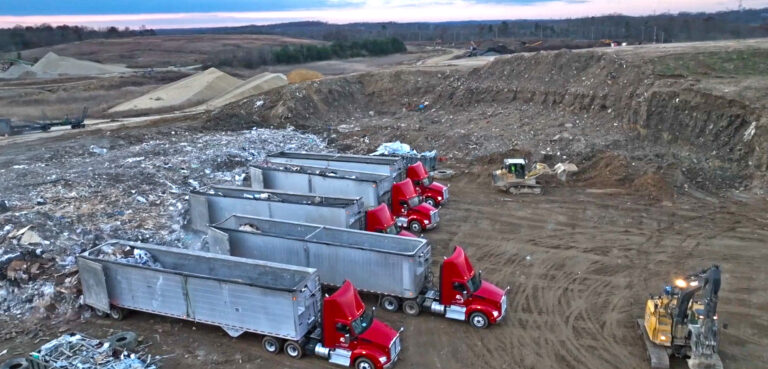
EAI Rolloff operates approximately 100 rolloff trucks and manages more than 3,000 dumpsters across the region. That capacity allows us to work with customers who need a single container as well as contractors managing large construction and demolition projects where several dumpsters may be in use at the same time. When a project enters a heavy demolition phase or the schedule changes, having additional equipment available can help prevent waste removal from becoming a bottleneck.
4. How Are Pickups and Container Exchanges Handled?
Don’t wait until a dumpster is overflowing to figure out how the pickup process works. Ask how far ahead exchanges should be scheduled, whether recurring service is available and what happens when the project needs an additional pickup outside the normal schedule.
For active construction sites, container exchanges should be part of the overall project plan. Some phases of work may fill dumpsters much faster than others, and service may need to increase during demolition or other high-volume periods. Establishing a schedule early and communicating as conditions change can keep debris moving off the site without creating unnecessary downtime for crews.
5. What Materials Can and Cannot Go in the Dumpster?
One of the easiest ways to run into problems with a dumpster rental is to assume everything can go into the same container. Construction debris may include concrete, wood, metal, roofing materials, drywall and other common materials, but certain items require special handling or cannot be accepted in a standard rolloff dumpster.
Ask about accepted materials before the container arrives, particularly if your project involves anything unusual. Paint, chemicals, batteries, propane tanks, asbestos and other restricted materials may require a different disposal method. Knowing the rules ahead of time can prevent rejected loads, additional charges and delays once the container is ready to leave the site.
6. What Recycling Options Are Available?
Construction waste doesn’t automatically have to become landfill waste. Depending on the materials generated, there may be opportunities to recycle concrete, metal, wood, cardboard and other construction and demolition debris. Contractors should ask whether their rolloff provider offers recycling options and whether materials should be separated on the job site or can be processed after collection.
EAI works closely with C&D Recovery, another Pleasants company, to provide coordinated hauling and recycling solutions for construction and demolition materials. For projects with recycling or sustainability goals, planning how materials will be handled before work begins can make the process much easier. Some projects may benefit from dedicated containers for individual materials, while others may be better suited for mixed construction debris.
7. Does the Company Have Experience with Large Construction Projects?
A company that primarily handles residential cleanouts may not be set up to service a commercial demolition project, data center, major development or long-term construction site. Large projects can require multiple containers, frequent swaps, detailed scheduling and coordination with superintendents, project managers and other contractors working on site.
Ask potential providers about the types of projects they regularly handle and whether they have the resources to adjust as your job changes. An experienced commercial rolloff company should understand that dumpster service has to work around deliveries, equipment movement, site access and changing construction schedules. Waste removal is only one part of the project, and it needs to fit into everything else happening on the site.
8. Can They Help with Container Placement and Site Access?
Where the dumpster goes can be just as important as which dumpster you order. Construction sites often have limited staging space, while projects in Washington, DC and other developed areas may have tight entrances, narrow streets or very little room for a truck to maneuver.
Before delivery, discuss the available space, surface conditions, overhead obstructions and how trucks will enter and exit the property. The container needs to be convenient enough for crews to use without interfering with deliveries, emergency access or construction equipment. For more complicated sites, working through placement and access ahead of time can save a lot of trouble when the truck arrives.
9. Can the Service Grow with the Project?
Construction projects change. A job that starts with one dumpster may eventually need three or four, and a container that only required occasional service during the early phases may need frequent exchanges once demolition gets underway. Your rolloff provider should be able to adjust with those changes rather than becoming another scheduling problem for the project manager.
This is where fleet size, container inventory, local coverage and communication all come together. Contractors should look for a company that can support the project from the first container through final cleanup, with enough flexibility to increase or reduce service as the work progresses. For long-term commercial projects, that reliability can be much more valuable than choosing a provider based solely on the initial rental price.
Choosing the Right Rolloff Company for Your Project
There are plenty of companies that can deliver a dumpster, but contractors should be looking for a partner that can provide dependable service throughout the life of the project. Asking about equipment, service areas, recycling, scheduling and commercial experience before work begins gives you a much better idea of what to expect once the job is underway.
EAI Rolloff has been serving contractors, businesses and property owners throughout the Washington, DC and Baltimore region for decades. With locations in Clarksburg, Capitol Heights and Manassas, approximately 100 rolloff trucks and more than 3,000 dumpsters, our team has the equipment and regional coverage to support projects ranging from straightforward cleanups to demanding commercial construction and demolition work.
If you’re planning a project in Washington, DC, Baltimore, Maryland or Northern Virginia, contact EAI Rolloff to discuss the job, the materials you’ll be removing and the type of service you’ll need. Getting those details worked out before the first container arrives can make waste removal one less thing to worry about once work gets started.